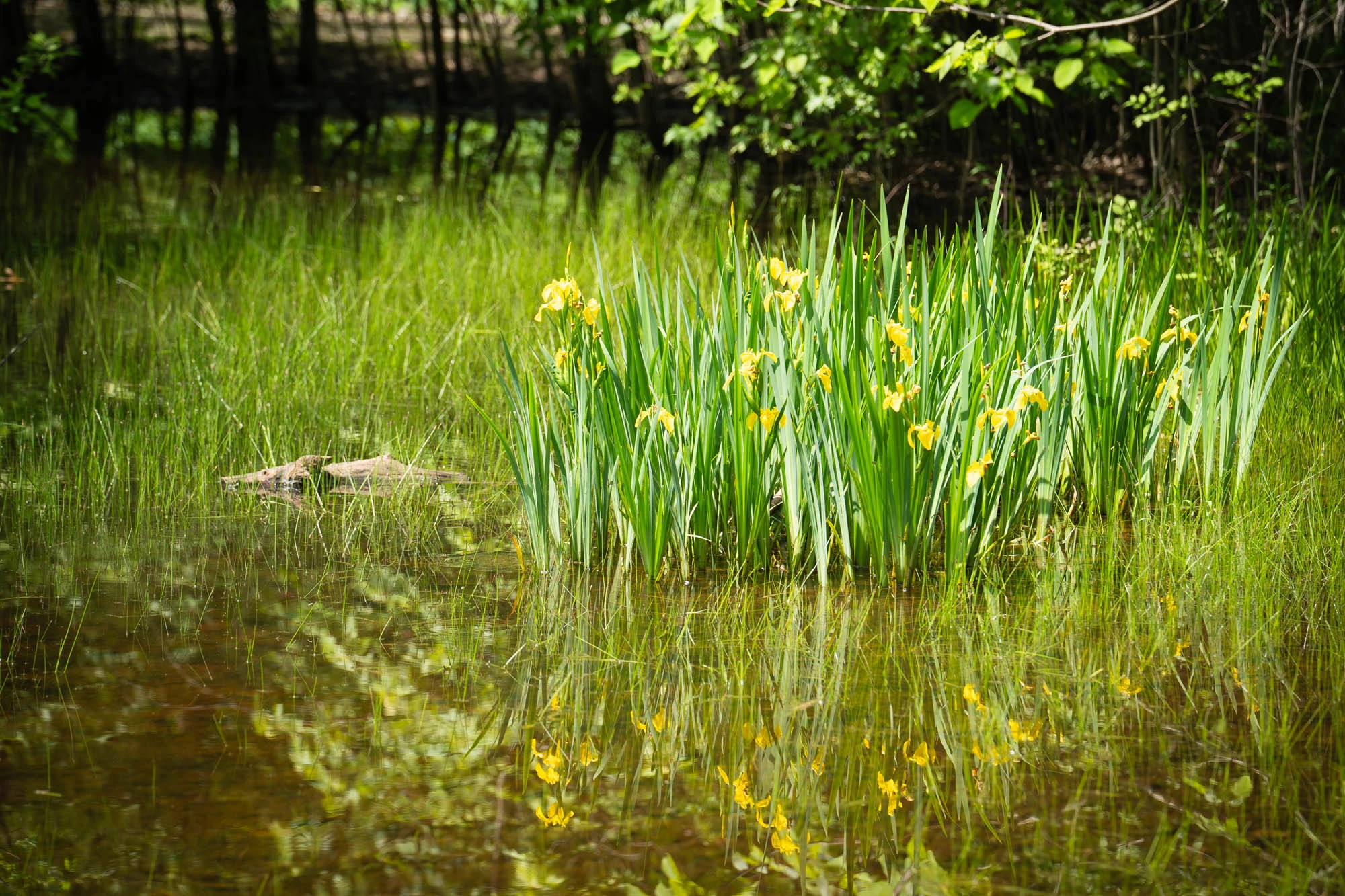
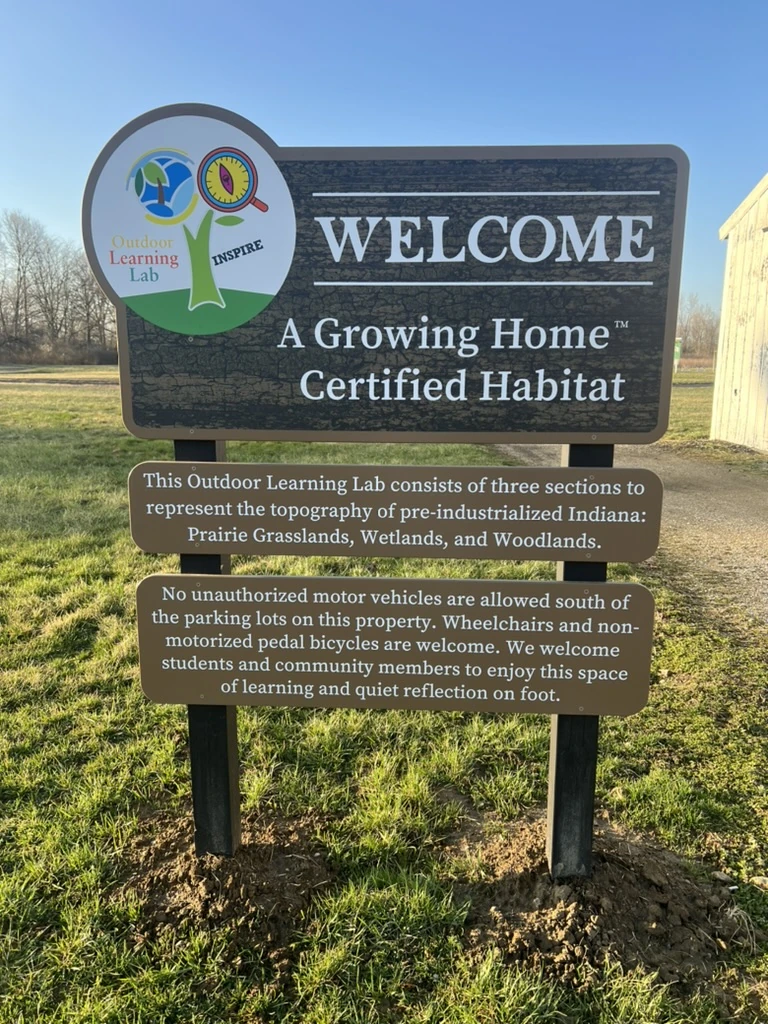
The Inspire Academy Outdoor Learning Lab is designed to be a microcosm of pre-industrial Indiana, with three sections: wetlands, woodlands, and prairie grasslands. While the woodlands are still in the development phase, the wetlands and prairie grasslands are available for daily use by teachers, students, and our community.
Our Outdoor Learning Lab gives students meaningful opportunities to explore nature, engage in hands-on learning, and build a deeper connection to the environment and each other. Whether tending gardens, studying ecosystems, or learning through play and observation, students experience learning in a way that is active, joyful, and rooted in real-world understanding.
Here, learning feels real — because it is. Students don’t just learn about science, they do science.
Nature offers endless lessons — and our students are encouraged to notice, wonder, question, and explore every day.
It’s a space where students can dig, plant, investigate, build, imagine, observe, and play — all while connecting learning to the world around them.
The Outdoor Learning Lab is more than a program — it’s part of who we are. At Inspire Academy, students don’t just learn about the world — they learn in it and from it.
Not only do our wetlands provide a unique learning experience for our students, they contribute to maintaining the health of our national ecosystem.
Wetlands provide a holding space for the release of flood waters and snow melt, as well as a nursery for many fish and amphibians.
Our wetlands are designated as an emerging wetlands habitat by the US Fish and Wildlife Services. Learn more about the importance and status of wetlands in the US by reading the
Wetlands Decline ReportMany unique plants grow and thrive in wetlands that don’t grow and thrive anywhere else.
Our students get firsthand experience identifying these plants and learning the difference between native plants and transplanted ornamentals.
To learn more about all the plants that grow in midwest wetlands, check out the comprehensive list below that serves as a resource for things like scientific scavenger hunts at our school.
National Wetland Plant ListAnyone who spends even a short amount of quiet time in our wetlands can hear that they are full of the music of frogs, peepers, and other small noise makers.
While class pets can be fun, our wetlands allow students to observe animals in their natural habitat, hiding under rocks and grasses, or sunning on the edge of the water.
The link below has a fun activity to help you identify wildlife, an activity similar to what our students experience as part of our Outdoor Learning Lab curriculum.
Cool Creatures in Midwest Wetlands
Our prairie grasslands serve multiple purposes. Indiana songbirds depend on prairie grasslands for both food and nesting. Pollinators, like honeybees, benefit from grasslands filled with wildflowers. And even many ground animals find refuge in the grasslands. Our grasslands also work with the wetlands on stormwater management.
National Geographic Explains GrasslandsCaring for prairie grasslands is low-maintenance. Once planted with the native grasses and flowers, they grow naturally in our climate. Every 3 years, the grasslands must be either cut or burned. If Inspire Academy hosts a supervised, educational grasslands burn event, the community will be invited to observe and learn.
As grasslands deplete, so does the songbird population. Our goal is to bring as many varieties of songbirds to our property so that our students can observe birds that are becoming rare. And in so doing, we hope to make these birds less rare. A walk in the grasslands is a walk filled with bird sounds.
Songbirds in the Grasslands
Our woodlands will take years to develop. First, we had to clear out all the non-native, non-hardwood species from the area. Then, we had to replant baby trees. Without a water source nearby, these baby trees are reliant on climate, and some plantings don’t make it, require plantings multiple years in a row to develop a healthy section of woodlands. Once enough trees are stable and hardy, we will map paths and create paths through the trees we are nurturing to create a quite space of reflection. The space will need at least 5 more years to noticeably be a woodlands and 7-10 more years to enjoy the shade and scent of woodlands air that can be found nowhere else but in a tall grove of trees.
When you visit Inspire Academy, you’ll see students learning with curiosity, joy, and purpose — both inside and outdoors. Our Outdoor Learning Lab is just one way we help students connect to the world, think deeply, and grow confidently.
2801 E. 16th St. Muncie, IN 47302
Telephone: (765) 216-7980
Fax: (765) 216-7798
Email: info@inspiremuncie.org
© Copyright , All Rights Reserved - Website & Digital Marketing by: Kreative Webworks